
You finish a job, the customer thanks you, and everyone goes home happy. Three weeks later, there’s still no review. Sound familiar?
Great service doesn’t automatically turn into great reviews. Customers get busy. Staff forget to ask. And when a business does ask, the request sometimes arrives long after the customer has moved on.
Getting more five-star reviews starts with a better customer experience and a dependable way to ask for honest reviews. You can’t choose the rating someone leaves, but you can make sure satisfied customers have an easy opportunity to tell others about their experience.
Here’s how to build that process, what a useful five-star review looks like, and how to make the most of the feedback you receive.
What makes a 5-star review valuable?
A five-star rating tells someone a customer was happy. A five-star review that explains why gives the next customer a reason to believe it.
Imagine you’re choosing between two home-service companies. One has dozens of reviews saying “Great job!” The other has reviews mentioning that the technician arrived when promised, explained the problem, cleaned up afterward, and didn’t surprise anyone with the bill. Which company gives you more confidence?
The details do the selling. They answer questions that a star rating alone can’t:
- Was the experience dependable? Did the business show up, follow through, and deliver what it promised?
- What stood out? Was it the staff, turnaround time, craftsmanship, communication, or value?
- Is the business still performing well? Recent reviews are more helpful than praise from several years ago.
- Does the experience sound credible? Specific, everyday language often carries more weight than glowing but vague adjectives.
Don’t hand customers a script. Give them an experience worth describing, and let them choose the words.
Real examples of useful 5-star reviews
Five-star reviews look different across industries. Here are four examples from local businesses, with the details a prospective customer is likely to care about in each one.
Tree service
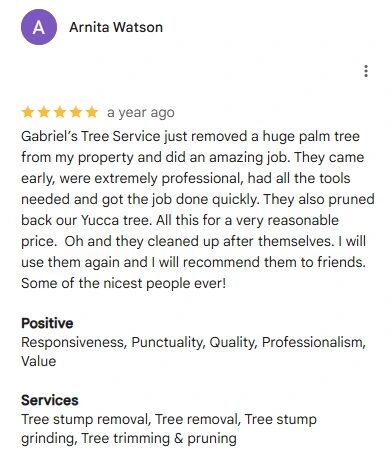
A tree-service customer is likely to care about punctuality, safety, cleanup, and whether the crew respected the property. Specific comments on any of these points are far more persuasive than a star rating by itself.
Car detailing
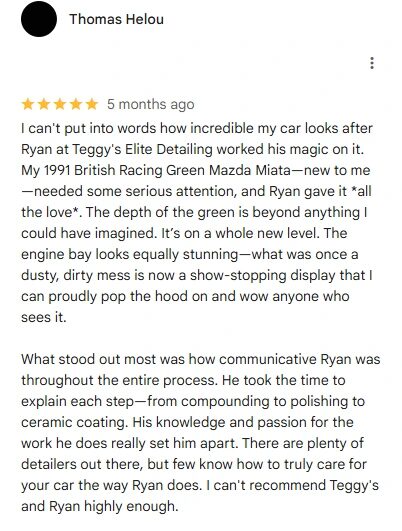
For a detailing company, praise about the vehicle’s condition, attention to tricky areas, and how easy the appointment was to arrange gives future customers something concrete to judge.
Barbershop
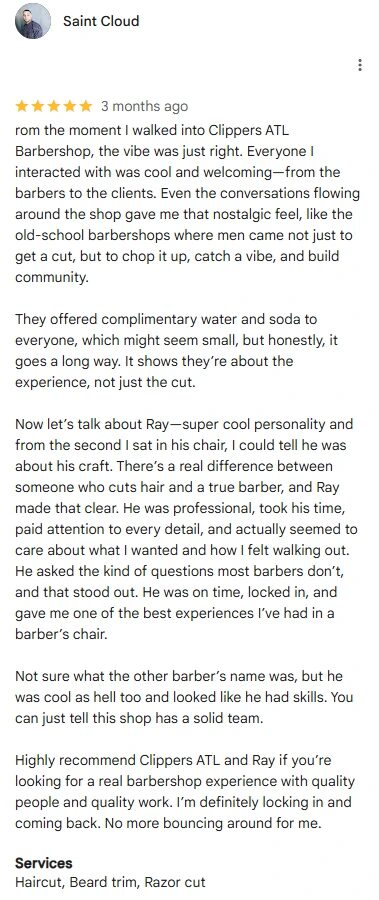
Barbershop reviews tend to be personal. Customers may mention the stylist, whether the cut matched what they asked for, and the atmosphere. Those details are useful to someone booking an appointment for the first time.
Wedding services
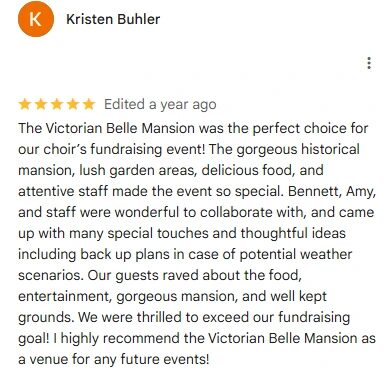
Wedding-service reviews often carry more emotional weight because the stakes are high and there’s no do-over. Reviews about communication, calm problem-solving, and delivering on promises help couples assess that risk.
How to get more 5-star reviews—without asking for 5 stars
1. Ask every eligible customer, not just the happiest ones
Google lets businesses ask customers for genuine reviews, but not cherry-pick people likely to leave five stars or reward them for posting. See Google’s review policy.
So don’t tell employees to identify the happiest customers and ask only those people. Instead, set a consistent trigger—such as a completed service, fulfilled order, or closed appointment—and send a neutral request to everyone who meets it.
Good request: “Thanks for choosing us. Would you mind sharing an honest review of your experience?”
Our guide to asking customers for reviews has more examples you can adapt for different businesses.
Bad request: “Loved your visit? Give us five stars!”
You may get some three-star reviews alongside the five-star ones. You’ll also get a more useful picture of how customers actually feel.
2. Make the review link easy to find
Don’t ask someone to search for your business, guess which location is correct, and hunt for the review button. Include a direct link to the relevant profile in your follow-up message.
Google Business Profile provides a way to share a direct review link. Our guide to creating a Google review link walks through the process.
For businesses with multiple locations, the link needs to point to the location the customer actually visited. Getting this wrong can create frustration and muddle your location-level ratings.
3. Ask while the experience is still fresh
A request sent months after the job was finished is easy to ignore. A follow-up reasonably close to the transaction is much more useful.
The ideal moment depends on the business. A restaurant might follow up shortly after a visit; a contractor may want to wait until the customer has had time to use the completed work. The guiding principle is simple: give people a real experience to review, then ask before the details fade.
Avoid hovering while customers write a review or making a rating feel like the price of leaving the store. Give them a link and let them decide.
4. Make review requests automatic
Staff members have other things to do. When review requests depend entirely on someone remembering to send them, even a well-run business will miss people.
Our latest online reputation management research shows how often this breaks down. Of 360 business respondents who identified their biggest obstacle to generating reviews, 49 cited lack of staff time and 48 said staff didn’t consistently ask customers. That’s 27% pointing to the same basic problem: the request process depends on someone remembering to do it.
ReputationStacker handles that work with automated email and text review requests, alongside review monitoring, customer feedback, and reputation reporting. You decide when to ask, and the process runs without someone at the front desk keeping a list. See how automated review requests work.
That’s worth more than another reminder taped to the office computer.
5. Send a polite reminder—then stop
A customer may intend to write a review and forget. A friendly reminder can help, especially if the first request arrived during a busy day.
One thoughtful reminder is plenty. Nobody wants to be chased for a review every time they open their inbox.
Start with one short request and, when appropriate, a follow-up. For natural wording, see our review-request email templates.
6. Fix the reasons people leave bad reviews
You could send a thousand perfectly worded review requests. If your staff routinely misses appointments or customers can’t get anyone to answer the phone, the problem isn’t the message.
Read the patterns. If customers mention slow checkout, poor communication, or confusing policies, assign someone to fix the underlying issue. That work can lead to more satisfied customers—and, eventually, more genuine five-star experiences.
It’s one reason ReputationStacker goes beyond review generation. Its customer feedback tools help you spot the complaints and compliments that keep coming up, so you can do something about them.
How to respond to a 5-star review
A good reply is short, specific, and written for both the reviewer and the next person reading your profile.
Suppose a customer writes: “Maya helped me choose a jacket and didn’t rush me even though the store was busy. I came back the next day to buy another one.”
A natural reply might be:
> Thanks for sharing this! We’ll make sure Maya sees your kind words. We’re glad you found what you were looking for, and we appreciate you coming back.
It acknowledges something real instead of dropping the same “Thank you for your five-star rating!” message under every review.
For a busy team, ReputationStacker’s AI Review Replies makes it much easier to write thoughtful, review-specific replies at scale. For more ideas, see our guide to responding to five-star reviews.
Where should your business focus its review efforts?
Google is usually the most practical starting point for a local business because customers encounter its ratings in Search and Maps. Google also makes it straightforward to share a review link.
Facebook can matter when customers already discover and interact with your business there. Its recommendations and page activity may support credibility, though it works differently from Google’s star-rating system.
Industry-specific review sites can be valuable when buyers routinely use them to compare providers. The right choice for a dealership, a restaurant, and a medical practice may differ.
Yelp requires a different approach. Yelp tells businesses not to solicit reviews at all, including through email, text, or staff requests. Don’t send Yelp review invitations through an automated campaign. You can still maintain your listing and respond to organically posted reviews. See Yelp’s own guidance.
Don’t spread your team’s effort across 20 platforms just because 20 platforms exist. Start where prospective customers actually look, and maintain a reliable process there.
Can you offer a discount or gift to get more 5-star reviews?
No. Never offer rewards for five-star reviews, and don’t offer a reward for posting any review on Google. The platform prohibits incentives even when the reward isn’t tied to a positive rating.
Paying for glowing reviews is also a bad way to build trust, regardless of where they’re posted. The FTC’s consumer-review guidance explains the rules on fake reviews and paid endorsements.
The simplest review request doesn’t need a coupon. It just needs to be honest, timely, and easy to complete.
How to put your best reviews to work
A strong review profile is useful when people find it. You can also bring that praise to places where prospective customers are making decisions:
- Your website: Show authentic recent reviews near relevant service or product information rather than hiding them on a forgotten testimonials page.
- Social media: Share suitable reviews with accurate attribution and without changing what the reviewer meant.
- Your team: Pass along specific compliments. Employees deserve to know when their work made a difference.
- Operations: Look beyond the stars. A pattern of praise about fast responses, for instance, may tell you what your customers value most.
ReputationStacker’s review widgets and social sharing can help businesses display and promote reviews without manually rebuilding each post or testimonial graphic.
Pick reviews that show what your business does well, and quote them accurately. A specific customer story beats a wall of identical five-star graphics.
Build a process that keeps working
If you want more five-star reviews, don’t start by telling your employees to ask for five stars. Start by making it easy for every eligible customer to leave an honest review, then use what people tell you to improve the experience.
ReputationStacker gives you one place to run the whole process: request reviews automatically, see new reviews as they arrive, reply with AI assistance, and track feedback across one location or thousands. Instead of chasing reviews one by one, you can spend that time improving the experiences that earn them.
See how ReputationStacker works.
Frequently asked questions
How do I get more 5-star Google reviews?
Give customers good experiences, ask all eligible customers for honest reviews with a direct Google review link, follow up at an appropriate time, and make the process consistent. Never request a specific star rating or offer a reward for posting a Google review.
Can I ask customers to leave a 5-star review?
Ask for an honest review, not a five-star rating. Google’s rules prohibit selectively soliciting positive reviews and trying to influence the rating or content.
Should I ask every customer for a review?
Use a consistent rule for invitations, such as completed transactions or appointments. Don’t leave out customers because you think they might give you a lower rating.
Do replies to 5-star reviews help?
Yes. Thoughtful replies show that your business pays attention and give prospective customers another glimpse into how you treat people. Avoid copying the same generic response onto every review.
How many 5-star reviews does a business need?
There’s no universal number. Look at the volume, recency, and quality of reviews on comparable local businesses, and focus on building a healthy ongoing flow rather than chasing an arbitrary target.
