Doctor Reputation Management

Asking patients for reviews is often painful, but you’ll need them for effective doctor reputation management strategies. Use ReputationStacker to simplify the work and collect reviews while you focus on providing the best care.

90%
of patients use reviews to evaluate physicians 
71%
check reviews first when finding a new doctor
43%
will go out-of-network for a better-reviewed provider

When You Get More Patient Reviews, You Get More New Patients

Just a few years ago, getting reviews from patients wasn't a very important part of your practice. But things have changed.

Research shows that 90% of patients use online reviews to evaluate their healthcare providers, whether they're just reading reviews written by other patients or writing the reviews themselves.

And while new patient referrals from your colleagues are still very important, 71% of patients use online reviews as the very first step in finding a new provider.

The same research shows that 43% of patients would go out of their insurance network to see a provider with better reviews than an in-network physician.

The importance of getting reviews from patients can't be ignored. ReputationStacker makes getting those reviews easy so you can focus on providing the best care and experience for your patients.

The value of reviews goes so much deeper than that. An amazing amount of data shows the power of reviews. Read more about how reviews can affect almost every part of your online presence. 

Get Patient Reviews... Automatically

Why does it seem like only cranky patients leave reviews? What about all of your happy patients - why don't they tell the world what an excellent provider you are?

The truth is that most patients either don't think to post an online review, or they just never get around to it. Most practices just don't know how to get patients to leave reviews, but we've fixed this.

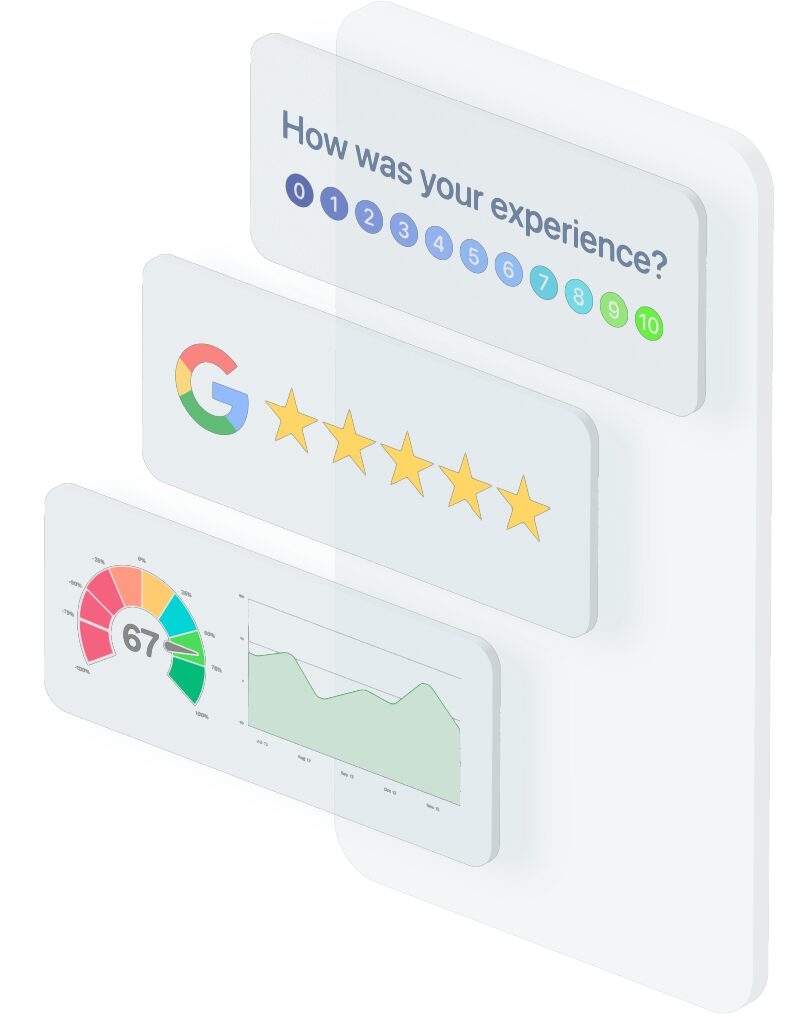
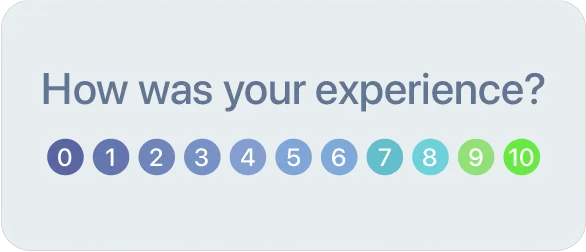
ReputationStacker makes getting reviews from patients easy. Our software automatically sends patients a one-question survey, then asks your patients to post an online review on the review sites of your choice.

More Than Just Patient Reviews

In addition to eliminating the pain of asking patients for reviews and generating a steady stream of new ones, ReputationStacker includes a full suite of marketing, reporting, and reputation management tools.

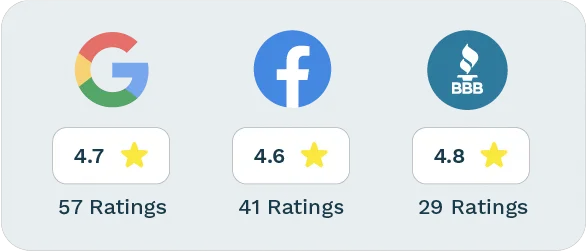
Our Review Feed widget lets you show your reviews on your website. It even automatically updates itself with new reviews whenever your patients post them to an online review site.

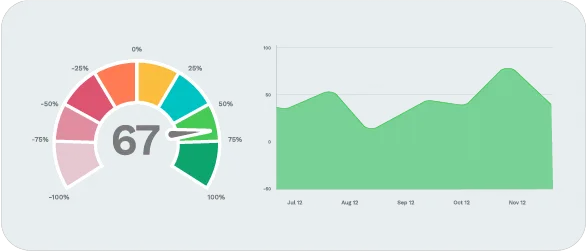
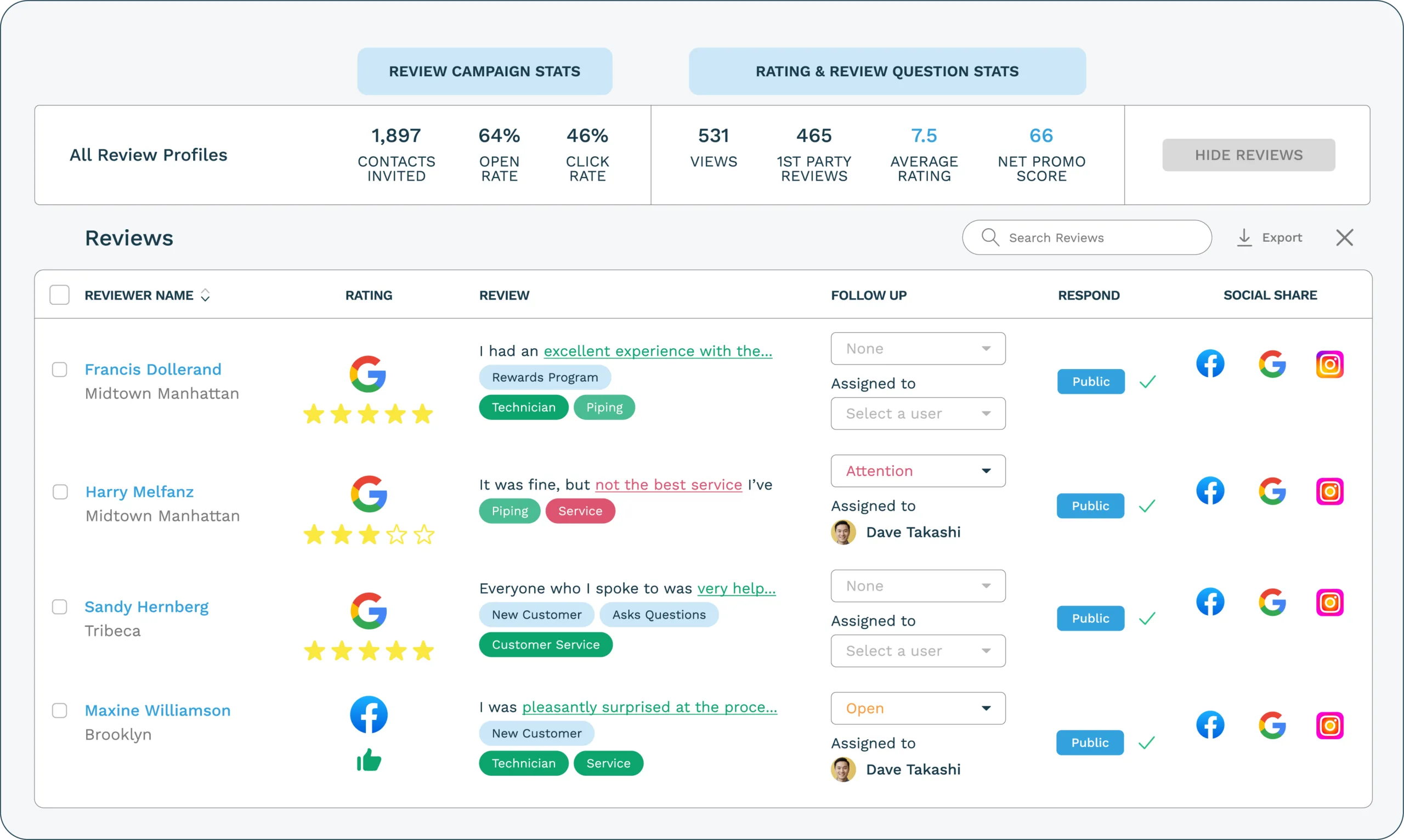
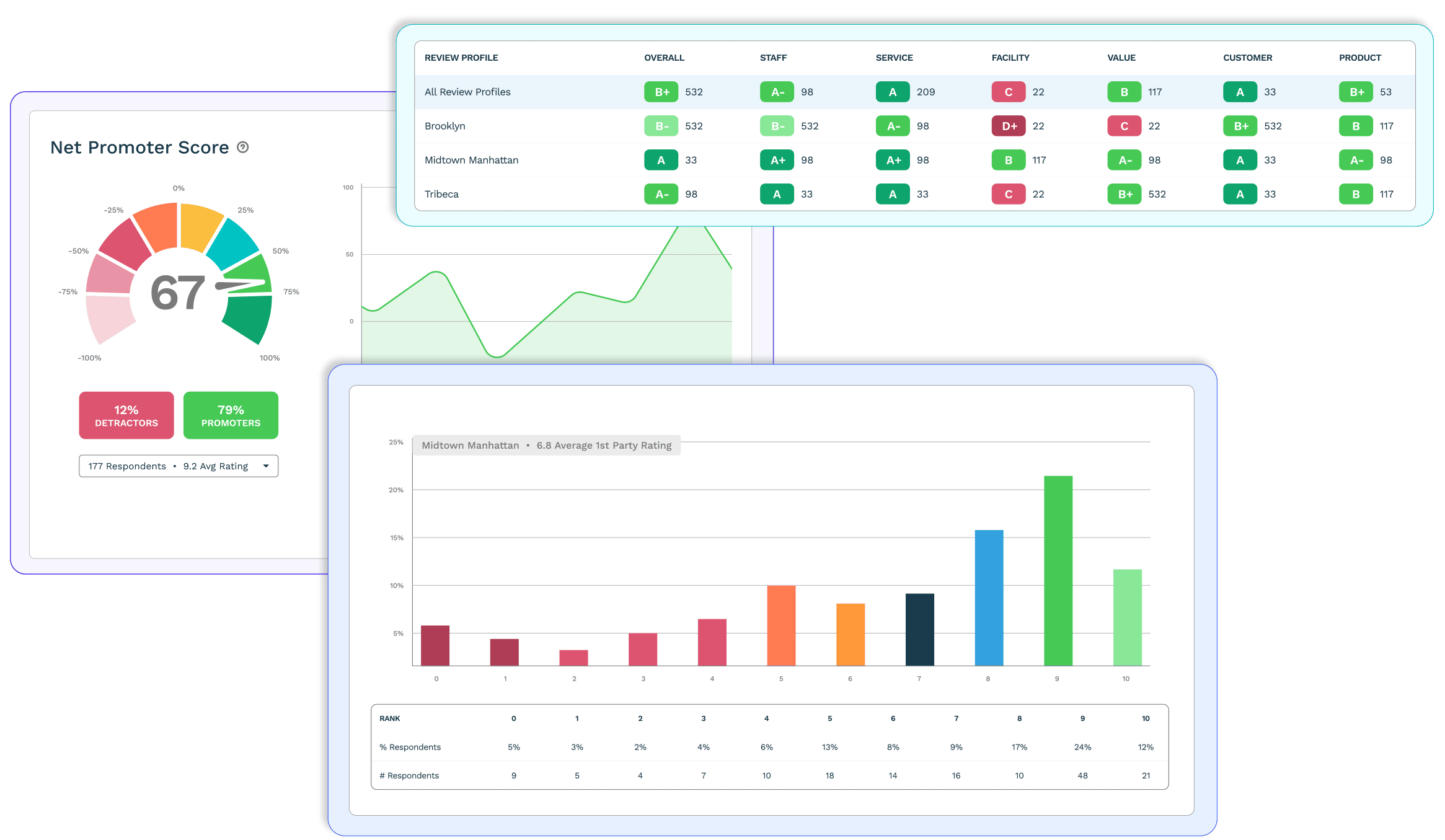
Detailed reports are available whenever you need them. Our tracking dashboard shows you each patient's actions and how the system has followed up with them.

ReputationStacker gives you full control of your patient reviews and your entire online reputation.

Here's what our clients are saying:

Before ReputationStacker, getting patients to write reviews was nearly impossible. Even figuring out how to ask patients for reviews in a way that wasn't uncomfortable was difficult, but we tried. We even held office competitions for reviews with our staff, but we could never get more than a few reviews.

Since we started using ReputationStacker our practice has gotten at least 10 new positive reviews every month. The software makes it so easy to get patients to write Google reviews and to leave reviews on healthcare-specific review sites like Healthgrades and RateMDs.

I can't recommend this service enough to other physicians and healthcare providers who need help getting patient reviews.

How doctors get patients to write google reviews

Dr. David Kim

INTERNAL MEDICINE

Start getting more patient reviews!

A Look at How Reviews Affect Doctor and Clinic SEO

Your reviews have tremendous power over your reputation. As you learned in the stats above, nearly every potential patient checks reviews, and nearly half of potential patients care so much about reviews that they would pay more to visit a better-reviewed doctor.

However, that set of stats doesn’t tell you the whole story or explain what roles these reviews play beyond informing searchers. For example, did you know your reviews can affect your SEO?  

Below, you’ll find an exhaustive explanation of the relationship between your reviews and your clinic. You’ll find answers to the kinds of insightful questions doctors know how to ask, and understand the importance of reviews through some of the latest polling and research.


Where Do Potential Clinic Clients Go Looking for Reviews? 

Fresh 2025 polling research by marketers revealed a new set of top platforms consumers prefer for reading reviews. The top 5 preferred were: 

  1. Google (83%)

  2. Local News (48%)

  3. Yelp (44%)

  4. Facebook (40%)

  5. YouTube (34%)

These results were not specialized for doctor reviews, but they give you a good starting idea of where to direct your resources. When monitoring new reviews, your priorities should include Google, Yelp, and Facebook. Create accounts on each one so you can join the conversation.

You may be surprised to see local news on this list. Still, local news remains highly credible to many people, especially for services in their communities, such as pediatricians, dentists, and doctors. 

Local news spotlights can still be a highly effective form of review, and they come with more baked-in trust than reviews from strangers. Unfortunately, these spotlights tend to be one-off events. You’ll need a review strategy for longer-term goals. 


Do Potential Clients Make Decisions Based on Reviews?

You already know that nearly all clients check these reviews, but research shows that the results of these checks are highly influential on a final decision. 

First, bad reviews can spook potential clients even after they’ve already committed to a visit. 40% of respondents to a recently published poll said they had changed their care plans due to negative online feedback alone. They reported they had either:

  • Canceled an appointment

  • Opted not to book with a particular provider

You may be surprised at how little negative feedback it can take to change your reputation. Research has found that 69% of patients avoid providers with ratings below 4.0 stars.  


Is Software Necessary for Managing Reviews? 

Software is a powerful assistant if you need a strategic approach to consistently getting more reviews, engaging with patient feedback, and addressing issues that arise. If you see a dozen or more patients a week, you could most likely benefit from that approach.

The influence of online reviews on a medical practice’s success cannot be overstated. Online reviews extend beyond star ratings; they are essential in local search marketing and significantly impact online visibility.

Effective management of online reviews allows healthcare providers to protect their brand reputation in online searches, and it goes far beyond that. Patient reviews drive referrals, attract new patients, and promote overall business growth for healthcare providers. 

Positive testimonials can have a ripple effect that leads to a strong and thriving practice, while negative reviews can deter potential patients. Our software automates and provides fast tools to complete the tasks needed for your strategy. 

It takes the workload off you and your team by monitoring reviews, sending you direct alerts, sending outreach emails tailored to your goals, and promoting great reviews on your site. 


Are Doctors Allowed to Respond to Reviews? 

You may be under the impression that, as a doctor, it is inappropriate or against health laws for you to respond to reviews. The American Medical Association (AMA) put together a statement to clarify what you can do:

“There are no federal laws or regulations prohibiting physicians or practices from responding to online patient reviews; however, unlike other businesses that may respond to online reviews in any way they deem appropriate, physicians are limited in what and how they can communicate with a patient reviewer in a public forum.

Acknowledgement of a patient’s relationship with the provider might risk violating patient privacy protected by the Health Insurance Portability and Accountability Act (HIPAA) and applicable state laws. 

It is important to note that HIPAA does not explicitly prohibit physicians from responding to online reviews; physicians are free to respond and contribute to an online review forum, but they must maintain the privacy of the patient’s protected health information (PHI), even if the patient has already revealed personal information. 

While a patient is free to share any information about their experience in an online forum, physicians are prohibited from disclosing any patient-specific information.”

The AMA has separately published some general guidelines you can follow if you want to make sure that you are responding appropriately. Here are some examples:  

   Do

   Don’t

  • Respond with general policies and standard protocols if you decide to respond online.

  • Think about responding offline. Patients sometimes take down a negative review after the physician or practice reaches out personally. Or, sometimes patients add an online review that lets others know your office is listening.

  • Make sure the practice is providing HIPAA training to the appropriate staff and do develop policies and procedures related to appropriate disclosures of personal health information, paying special attention to avoiding disclosures on social media.

  • Respond immediately. Take a deep breath and walk away.

  • Acknowledge the person is a patient in your office or disclose any other information about the patient if you decide to comment publicly. HIPAA says a physician can’t disclose information about a patient without the patient’s permission and a patient’s own disclosure does not give the doctor permission to disclose information.

  • Ignore online criticism. Look at it objectively (from the patient’s point of view) and decide if you or your office could do something differently.

  • Shy away from online reviews. Usually, reviews are positive so ask patients to rate and review you.

Check out the complete guidance or contact your licensing body to learn more about responding to reviews appropriately.  For doctors, the HIPAA-compliant features available starting in our Professional tier can provide you with an extra layer of protection.  


How Our HIPAA-Compliant Reputation Software Can Help You Respond Appropriately

ReputationStacker has been built around the needs of our doctor clients. We’ve developed several features that make it easy to observe requirements when performing reputation management tasks. 

First, our software includes a set of pre-approved HIPAA-compliant response templates that are worded to help you maintain consistency and adhere to HIPAA guidelines.  These specialized templates are careful to invite patients to contact your office rather than invite them to have a conversation in a public review section. 

They are also worded to show anyone who might be reading the interaction that you have a commitment to privacy, even when reviewers are being negative. These templates can serve as a helpful guide when addressing patient reviews. They can help you streamline your response process while maintaining patient privacy and confidentiality. Remember to customize the template to address the concerns raised in the review while maintaining HIPAA compliance.


Do Searchers Expect Doctors to Respond to Reviews?

Research suggests that clients expect to see responses when they look up reviews. Responding to good reviews makes you appear attentive, and responding to bad reviews can give readers the chance to hear both sides.

Recent polling found that 89% of respondents expected to see business owners respond to reviews of all types. Review searchers may hold these views because they are working under some unflattering assumptions, like: 

  • If you don’t respond to bad reviews, it means you can’t explain yourself

  • If you don’t respond to good reviews, it means you’re not grateful for feedback

These assumptions are often inaccurate. Many doctors would love to have more time to respond to good reviews, but lack the tools to make it practical. The assumptions alone can impact your online reputation. 

You’re also on a timeline when it comes to responding to reviews. 2022 research reviewed by Google found that more than half of all customers expect a response from you within just a week. One in three respondents considered a week to be too long to wait.

In the guide linked above, Google reminds you that all reviews can be altered on their sites. That means responding to a bad review comes with the opportunity to change it and make a new last impression. That’s an opportunity you shouldn’t give up.    

How strongly potential patients feel about this makes it even more critical to know where all your reviews are. If you don’t know about them, you can’t respond to them, and that alone can leave the wrong impression with your potential patients. 


Do Doctors Need to Respond to Good Reviews?

One of the reasons it is so important to have comprehensive review monitoring in place is that responding to good reviews is highly valuable.  

As you learned in the last section, ignoring good reviews can make you seem dismissive of nice feedback. Positive reviewers often like recognition of the time they took out of their day to praise your work publicly, and can feel hurt if ignored.

However, that’s just one way your choices can affect you. Here are some other reasons that you should make a point of monitoring and responding to happy reviews:

  • It allows you to improve the SEO value of the interaction: All parts of a public review interaction, including your responses, are part of the SEO value of your reviews. If your happy patients didn’t provide the keyword terms that would make the review more valuable for SEO (for example, mentioning your geographic location), simply include those terms in your reply. Remember that you should never discuss specific patient care details; just state what your practice does if it isn’t properly included.

  • It allows you to respond to errors: Great reviews may contain erroneous descriptions of your services because your reviewers confuse service terms. Even when this is unintentional, it can affect your reputation with some potential patients. Use your thank-you message to clarify your service for other readers.


How Many Review Sites will Potential Patients Check? 

74% of people who answered a recent poll reported that they check at least two review sites before deciding on a product or service. This suggests that you should monitor more than one site to satisfy review readers.

Stats like these show that being active on more than one site matters. You should be active on the major sites like Google, Yelp, and Facebook. You should also research the healthcare-specific sites that are most trusted for your practice. 

Maintaining your presence on multiple sites simultaneously is simpler with reputation management software like ReputationStacker. You just need to select the sites you want to monitor from a list to get notifications whenever a new review drops.


Are There Specialized Review Sites for Doctors and Clinics?

Several sites specialize in hosting reviews about doctors. While none of these sites attracts as many visitors as Google, they may be more credible to some users than others. You should be sure you’re monitoring reviews on all of the following sites:

  • RateMDs

  • Zocdoc

  • WebMD

  • Healthgrades

  • Vitals

Keep an eye out for new review sites that cover doctors and medical services. These sites tend to rise and fall in popularity, so you’ll need to stay informed or have software that can alert you to the newest ones. 


How Do Online Reviews Affect Clinic SEO?

Google and other search engines are often careful not to divulge how their algorithms function. However, based on marketers' tests on local results, reviews are believed to interact with SEO in several ways.

First, new reviews are considered a ranking factor in the local packs that appear for most local searches. Research from only the last couple of years suggests that reviews account for about 16% of the ranking power of local results.

That same research suggested that reviews were an even larger ranking factor than links (11%), searcher behavior (8%), or citations (7%). 

While these numbers can only be estimated because Google won’t share them, it makes sense that Google would give reviews this kind of weight. Just think about what reviews can tell them about your business. Regular new reviews give Google and its algorithms good reason to believe that your clinic is:

  • A real operating business: Some negative SEO teams will attempt to report your business as closed as an underhanded local tactic. Having fresh reviews and responses can help keep these tactics from working.

  • Meeting searchers' needs: When reviewers love your business, they trust Google more for pointing them in the right direction. This incentivizes Google to give extra weight to results that generate a lot of good reviews.

  • They count as content: When you have a lot of reviews, Google has a lot of information to freshly categorize you in their search results. Even when the reviews aren’t added to your website as content, Google still evaluates them as part of your local position. 

You can and should take the next step and use reviews as content on your website.


Can Clinics Use Reviews as Site Content?

Clinics can and should use reviews as content. The power of reviews as site content can’t be underestimated. Third-party opinions can simply be more influential to your website visitors, even when the content is hosted on your own site.

Using reviews this way can also save you some time and money. If you struggle to develop fresh, regular content that fits your website, start posting new reviews as a feature on your pages.

This will help you constantly refresh your website with new content. As a bonus for your SEO, thoughtfully written reviews are often keyword-rich and relevant. The more service terms the client mentions in these reviews, the more value they have as content.

One feature of our reputation management software is that it can automatically send reviews that fit your criteria to be posted on your website.

Start getting more patient reviews!

A wide-scale patient review strategy is possible when you have the right tools to help you.  With features like automated outreach for every visit, sensitive review monitoring tools, and even tools for promoting the best reviews, you can do the reputation management work of an entire team from one dashboard.

Start developing a comprehensive review strategy for your clinic today by starting with a free trial. You can try out all our tools and even start collecting reviews on sites like Google that you can keep when the trial ends. We’re confident you’ll love the results.